

Why I Built TwixTalk: A Family Story
As a member of the Sandwich Generation, TwixTalk was born from my own family’s caregiving journey. I built it to help families stay connected and share important health updates without the stress.

Notes the Whole Family Loop Can Actually Use
You had started a shared Google Doc eighteen months earlier. Medications section: fourteen months out of date. Appointment log: three entries, then an eleven-month gap. The running log: forty-two entries by you and two by your sister, from a period when you were traveling. The document existed. It was not a system anyone was using.

When the Family Loop Cannot Agree on Anything
Your mother wanted to stay in her house. Your sister agreed that her wishes should be honored. Your brother believed her safety mattered more than her preference. You had this conversation eleven times in three months. The twelfth looked exactly like the first. More information had not changed it.

How to Keep Everyone Informed Without Daily Calls
Your sister lived three time zones away. She called Tuesdays and Fridays. Sometimes in between. You did not resent the calls. You appreciated that she cared. What you could not always afford was the forty-five minutes each one required. By the time you had reconstructed the full situation from scratch, the morning's momentum was gone. Your sister was not the problem.

The Conversation That Protects Their Dignity
Your father had been cooking for himself since your mother passed. It was a point of pride. You had noticed the old food in the refrigerator, the stove left on twice. You needed to say something but you did not know how to say it without taking away the one thing he was most holding onto.

How to Set a Limit Without Abandoning Anyone
You had told your family you would not be available after nine. You needed that window. Your mother called at nine-thirty, then ten. Your brother called at ten-fifteen to say she was worried. You called her. She was fine. She had wanted to tell you something that occurred to her. You lay awake until midnight. Not because of the call.

Every Contact. Findable by Anyone.
Your daughter called from the pharmacy. She was trying to pick up your mother's prescription but the pharmacist needed the prescribing physician's contact to verify something. She could not reach you.

The Loop Keeper Checklist for When Things Change
Your brother asked how long your father had been having trouble with his memory. You said what are you talking about. He described what he had observed on his visit. You sat with it and realized he was right and that you had not noticed because you had been in it the whole time.

The Call at the Worst Possible Time
Your uncle called at noon every day. You were in the middle of a conversation with the discharge coordinator when he called back a second time. You answered. Four minutes later you returned to find the coordinator had been pulled away. You waited twenty minutes to resume a conversation that had already taken three attempts to complete. He had asked how your father was doing.

When One Person Controls What Everyone Knows
Your siblings were asking questions about things you had already addressed in your updates, in ways that suggested they had received a version of your update rather than the actual one. When you asked, your older brother admitted he had been simplifying your updates before forwarding them because he thought they were worrying people unnecessarily. He had been doing this for eight weeks. Your sister had made a significant travel decision based on substantially incomplete information.

The First Week Home Is the Hardest
Your mother was discharged Friday afternoon. By dark she was home. The aide started Monday. The controlled substance prescription needed a paper script you did not know about. The Family Loop sent messages at all hours. By Sunday you had not slept more than four hours any single night. Everything was not okay but you could not explain it in a text.

Who Needs Access and Where to Put It
Your sister called from the emergency room. Your father had been brought in. They were asking about his advance directive. She did not know where it was. You were not certain the copy you knew about was current. Thirty-five minutes and three phone calls later you had the right information. The document existed. The access did not.

Keeping Everyone Informed Without Losing Their Trust
Your mother had asked you clearly not to share one thing with the Family Loop. Three months later your aunt mentioned it during a visit. You had not told her directly. You had mentioned it in an update as context for a coordination question. It had seemed relevant at the time. Your mother looked at you from across the room with an expression you will not forget.

Stop Being the Only One Who Knows
Your sister wanted to take over the specialist calls. You spent two hours briefing her. She made two calls and then had a question that pulled you back in. By the time the dust settled, you had spent more time managing her management of the calls than you would have spent making them yourself. You resumed making the calls.
They Want to Help. They Just Don't Know.
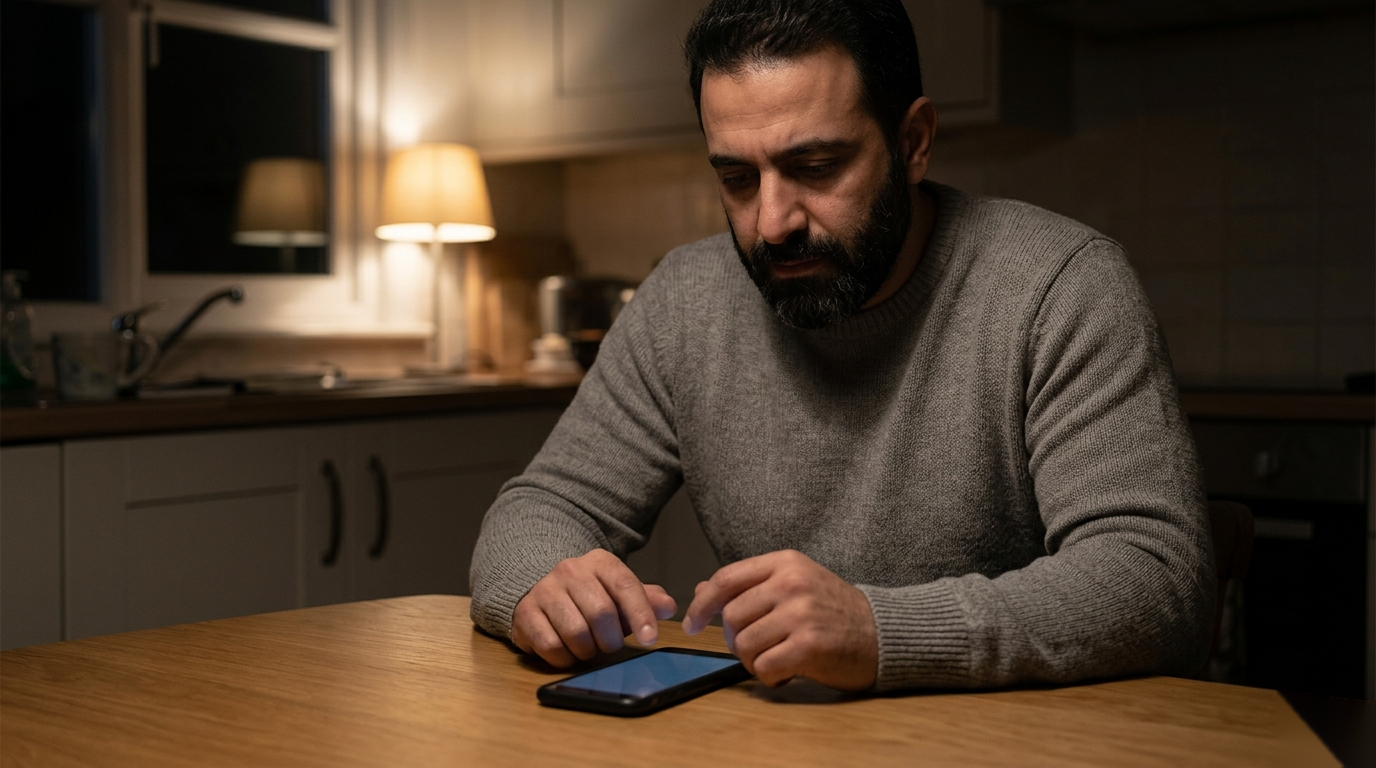
Your aunt called every two weeks. She always ended with "let me know if there is anything I can do." You always said you would let her know. Neither of you followed up. After six months she told you she felt useless. You told her you had never had the bandwidth to figure out what she could do that she would actually be able to do.

The One Who Is Never Here but Always Has an Opinion
Your sister lives four states away. She calls on Sundays and tells you what she would have done differently. She was not there for the decision and she was not consulted because there was no time. You do not say that. You say you will keep her thoughts in mind. And you sit with the particular exhaustion of being critiqued by someone who has never had to carry the weight they are critiquing.

Friends Belong in the Family Loop Too
Your best friend had been to the hospital twice, driven your mother to an appointment you could not make, and called you afterward to debrief. She was not in the group text. You had never added her. One afternoon you realized your brother knew less about your mother's situation than she did, and that this was the result of nothing except a decision you had never made.

The Guilt That Never Quite Goes Away
On Thursday you had not called. You had meant to. The day had gone sideways and by nine at night the call felt too late. On Friday your mother mentioned, in the way she mentioned things that mattered, that she had not heard from you. She was not accusing. She was noting. You called your sister and said something you could not quite retract about doing this alone.

The Only One Who Knows Everything
You were on a flight for four hours. When you landed there were nine messages. Your father had had a difficult afternoon. Your sister had tried to reach you, then your mother, then the pharmacy, then the doctor's office. The information everyone needed was on your phone. You had been over the Atlantic with it. The new post is about Single Point Dependency and what to do before the flight that reveals it.

Before the Family Loop Falls Apart
The first sign was that your sister had stopped responding to the group text. Then your brother started messaging you directly instead. Three weeks later your mother had a fall and your sister did not know about the change in her evening routine because she had stopped reading the group text before that conversation happened. By the time your mother was home from the emergency room, you were explaining the situation to people who should have already known it.